makr.ai for podcasts
A produced show on your topics.
Give makr.ai a topic, or attach a document, and it researches, writes and produces an episode with two hosts, music and sound. Every episode opens in makr Studio for editing, and you can set a show to run every week.
Updated
Real episodes
Press play.
Every episode here was made with makr.ai: the script, the voices, the music and the mix.
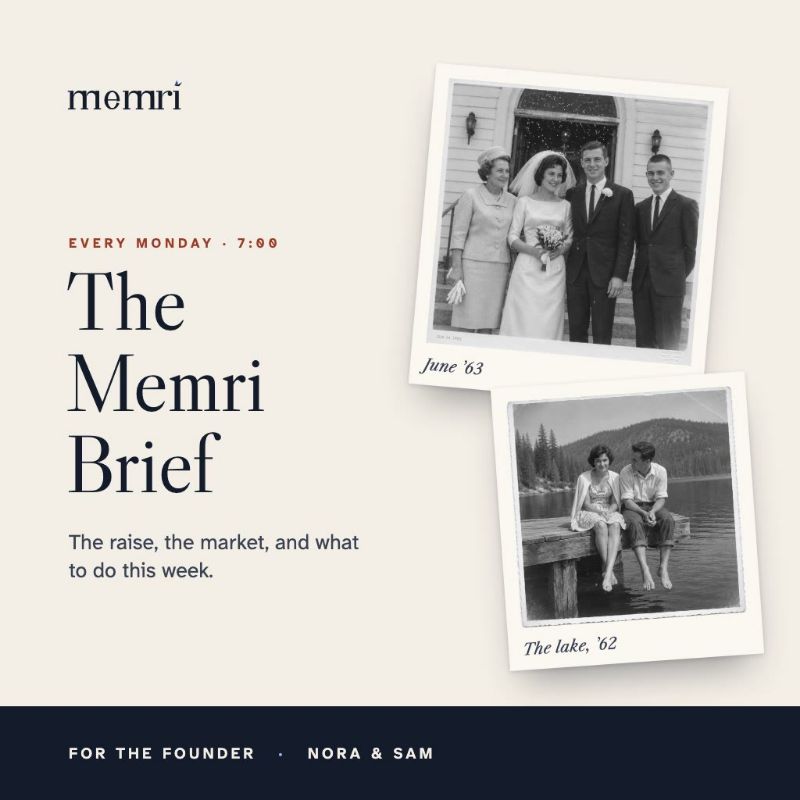
Weekly briefing
The Memri Brief
3:17 · two hosts · sourced
$0.08 media generation cost
Read the transcriptHide the transcript
Nora: Good morning. It's Monday, October fifth, and this is your Memri brief: the raise, the market, and what to do this week.
Nora: It's also day one of your ninety-day plan. So we'll keep it practical.
Nora: Sam, start with the raise. One and a half million, pre-seed, eighteen months. What do investors ask first?
Sam: What happened to the others. HereAfter AI was reported shut down this year. StoryFile went through Chapter Eleven. And Meela, after a reported three and a half million dollar seed, now leads its site with a rides service.
Nora: So the demo isn't the question.
Sam: No. Retention and unit costs are. Every photo that moves is paid AI video. That's why the plan caps them.
Nora: And there are no users yet.
Sam: Which the deck says plainly. The numbers come from the beta: fifty families, and whether she tells the story of three photos within forty-eight hours.
Nora: The market. Has anything moved?
Sam: The need hasn't. More than sixteen million Americans over sixty-five live alone, and a third of adults fifty to eighty felt lonely in twenty twenty-four. Same as in twenty eighteen.
Nora: And the people who'd pay?
Sam: Pew, this August: fifty-four percent of Americans in their forties have a parent over sixty-five and children to support. That's your buyer. Busy, and often far away.
Nora: Competitors?
Sam: MyHeritage animated ten million faces in about two weeks, and chose not to let them speak. The real threat is Ancestry: three million paying subscribers, and the photos already. If they add conversation, you compete on trust.
Nora: Money that isn't equity.
Sam: Two to know. AARP's AgeTech Collaborative: an eight-week virtual accelerator, no fees, no equity. You get in with a three-to-five-minute pitch at one of its events.
Nora: And the government one?
Sam: The National Institute on Aging's Start-Up Challenge opens December first and closes January fifteenth. Up to twenty-one finalists get twenty-four thousand dollars. Seven winners get seventy thousand more.
Nora: So, this week.
Sam: Send the first beta invites. Then watch where they stall.
Nora: Book counsel for the trust review: disclosure, voice consent, export and delete. Before anyone outside the beta sees it.
Sam: Apply for an AgeTech pitch slot. And put December third in the calendar. That's the NIA webinar.
Nora: One more thing. When HereAfter reportedly closed, families could only get their recordings back by email.
Sam: So the export button goes in before the ads do.
Nora: That's your brief. Sources and links are in the email. I'm Nora.
Sam: And I'm Sam. Good luck on day one.
AskA weekly news podcast for my team. Our industry and topics:(your words)
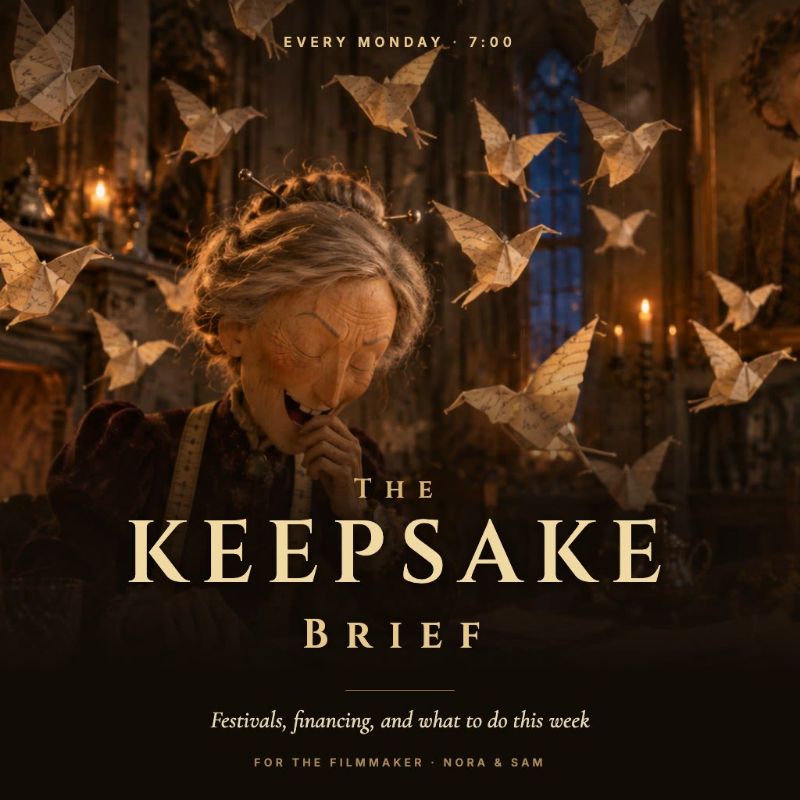
Weekly briefing
The Keepsake Brief
3:21 · two hosts · sourced
$0.08 media generation cost
Read the transcriptHide the transcript
Nora: Good morning, Mara. It's Monday, October fifth, and this is your Keepsake brief: festivals, money, and what to do this week.
Nora: Three things today. The Oscar clock just reset. What grants will and won't cover. And what Kickstarter actually pays for.
Nora: Sam, the clock.
Sam: Last Wednesday, September thirtieth, the Academy's window for this year's festival wins closed. The list runs October to September. On that pattern, an Annecy win in June twenty twenty-eight would count toward the Oscars in twenty twenty-nine.
Nora: Which is Keepsake's year.
Sam: If it's finished. And one detail matters. At Annecy, only the Cristal and the Jury Award qualify. A family film placed in Young Audience wouldn't. So you enter Official.
Nora: Anything sooner than twenty twenty-eight?
Sam: Annecy opens submissions for twenty twenty-seven this month. Not your year, but it's the calendar you'll live on. Last time, short films closed in mid-February.
Nora: Money. The working budget is three hundred and forty-five thousand dollars. What do grants actually cover?
Sam: A slice. BFI Network gives five to twenty-five thousand pounds, only in England, to about thirty out of a thousand applicants. Sundance gave five grants of thirty-five thousand dollars, to its own alumni.
Nora: So how did the stop-motion nominees pay for theirs?
Sam: Co-production. Wander to Wonder had money from four countries. Beautiful Men, from three. One partner in Europe or Canada opens public funds a U.S.-only film can't reach.
Nora: And Annecy's market?
Sam: Mifa's pitch track for shorts in development closed on January twenty-second this year. A January entry fits your financing window.
Nora: Last one. Kickstarter.
Sam: Anomalisa raised about four hundred and six thousand dollars on Kickstarter, as a planned forty-minute stop-motion short. Pear Cider and Cigarettes raised sixty-four thousand to finish. Both paid for part of a film. Not all of it.
Nora: And then Anomalisa became an eight-million-dollar feature.
Sam: Which is not the plan.
Nora: Not this year. So, this week.
Sam: One. Ask your line producer to re-bid the animation line in animator-weeks. At union rates, we think eighty-five thousand is low.
Nora: Two. Write a one-page note to one possible co-producer abroad.
Sam: Three. Start the AI record, shot by shot: what was built, what was generated, who directed it. The Academy may ask. And in June, part of the Annecy audience booed a short that used it.
Nora: And four, read Annecy's new rules when they post. Sources and links are in the email. I'm Nora.
Sam: And I'm Sam. Good luck with it, Mara.
AskA two-host podcast every Monday on my topics:(your words)
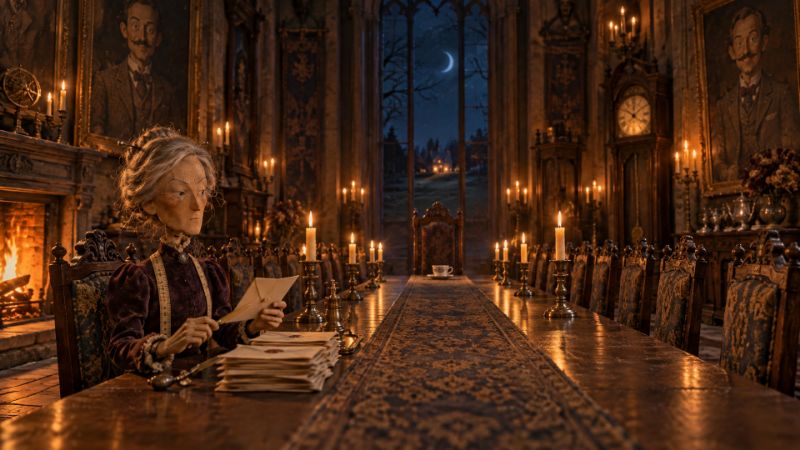
Audio drama
“The Long Table”
Scenes 8–10 as an audio drama · 3:30
$0.15 media generation cost
Read the transcriptHide the transcript
Eleanor: It's wet. And it's wearing a sticky note.
Eleanor: I put this here. Not the boy. A. Reyes, nights.
Eleanor: Are you A. Reyes, nights?
Adela: Yes, ma'am. Nine years.
Eleanor: Go away, A. Reyes.
Eleanor: Dear Mr. Whitlock, like you, I believe every great idea begins with a single spark.
Eleanor: Nineteen years dead and still getting fan mail, Arthur. It isn't even true. Most great ideas begin with somebody else's.
Eleanor: Dear Founder. Somebody did her homework.
Eleanor: The Heron was designed by Theo Reyes. I built it. I'm keeping the money, because our roof leaks. But the design is his, and somebody should write that down where it gets read.
Eleanor: She kept the money. Good.
Eleanor: Point your phone at this letter. Certainly not.
Eleanor: Good God. Handwriting like a spider having a fit.
Theo: Dear Mrs. Whitlock. Not Mister. Everybody else wrote Mister, I checked. I'm Theo Reyes, I'm twelve and three-quarters, I live in the cottage behind your garages, and I lost. That's not why I'm writing.
Eleanor: Mercifully.
Theo: I have observed your window for two thousand one hundred ninety-one nights. Not in a creepy way. In a scientific way.
Eleanor: It's always creepy when they say scientific.
Theo: You set two plates. My mom works nights. I set one for her.
Theo: Here is a fact. In Notebook Nine your husband wrote E's idea forty-one times. I counted twice. I think E is you. I think the plaque is wrong. I tried to fix it, and I lost.
Theo: The notebook's under this. I borrowed it. The sign says touch everything. Page two hundred twelve. It's his voice. I got it off the TV. Sorry.
Theo: Sincerely, Theo Reyes. P.S. I know I'm not supposed to be past the kitchen.
Eleanor: The help's boy has watched me eat for six years. And now he's stolen your notebook.
Arthur: E's idea.
Arthur: E's idea. Hers, not mine.
Arthur: E's idea. Hers, not mine. E's. E's idea.
Arthur: E's idea. Hers, not mine. Don't tell her I said so. She'll be insufferable.
Eleanor: Ha. Ha, ha ha.
Eleanor: You coward. Forty-one times. In pencil.
Eleanor: I would have been.
Eleanor: Mr. Reyes. Your letter was four pages too long, and there is no J in gyroscope.
Eleanor: Mine. Not his. Thank you.
Eleanor: Saturday, nine o'clock, the workshop. Bring the bird. I believe we have the part. E. Whitlock. P.S. Learn cursive.
AskA scene from my screenplay as an audio drama. Which scene:(your words)
Two-host episode
The Monday Brief — episode
3:06 · two hosts · sourced
$0.06 media generation cost
Read the transcriptHide the transcript
Nora: Good morning. It's Monday, September twenty-eighth, and this is your brief on film financing, festivals and the business of getting movies made.
Nora: Three stories this week. A federal film tax credit that could change where movies shoot. Toronto's first real market. And where the deals go next.
Nora: Sam, start with Washington. Last Thursday a bill landed that people in this business have wanted for a long time.
Sam: Right. On September twenty-fourth, a bipartisan group in the House and Senate introduced the Motion Picture, Television and Entertainment Revitalization Act. <short pause> It's a twenty percent federal tax credit on what productions pay American workers.
Nora: Who qualifies?
Sam: Features and series that cost more than a million dollars, with at least seventy-five percent of the shoot days in the U.S. And it can go up to thirty percent with bonuses. <short pause> One of those bonuses is for independent productions. Another is for shooting in rural opportunity zones.
Nora: So this isn't only a studio story.
Sam: No. If it passes, it applies to productions that start after December thirty-first. The credits are transferable, so a small producer could sell what they can't use. <short pause> It has the MPA, SAG-AFTRA and the DGA behind it. It still has to get through Congress.
Nora: Story two. Toronto just wrapped, and this year it ran something it never had before.
Sam: A formal market. TIFF ran it from September tenth to the sixteenth, and the interesting part is that it moved upstream. <short pause> Not just buying finished films after a premiere. Financing, packaging, pre-sales, projects that haven't shot yet.
Nora: Give me an example.
Sam: Copperhead came in with Miles Teller and Jason Momoa attached, before cameras rolled. And on the finished-film side, Roadside Attractions and Vertical picked up Lauren Miller Rogen's Babies, eyeing a theatrical release in twenty twenty-seven.
Nora: And what does that mean for someone with a project and no cast yet?
Sam: Honestly? The earlier you sell, the more the price depends on cast, genre, territory and comparable titles. <short pause> So your package, and your comps, carry the whole conversation.
Nora: Last one, quickly. Where do those Toronto conversations go next?
Sam: Los Angeles. The American Film Market runs November tenth to fifteenth at the Fairmont Century Plaza. That's where a lot of what started in Toronto either closes, or doesn't.
Nora: Six weeks to get the deck right.
Sam: Six weeks.
Nora: That's your Monday brief. Sources and links are in the email. I'm Nora.
Sam: And I'm Sam. See you next week.
AskA two-host podcast episode on this week's news in my field:(your words)
How it works
Your show, every week if you like.
1
Say what it's about
A topic, the news in your field, or a document you attach. Say who it's for and how long.
2
makr.ai produces it
It researches, writes the script, casts two hosts, and adds music and sound.
3
Edit and share
Open it in makr Studio to change anything, down to the last sound. Share it by link.
Set it to run daily or weekly, and makr.ai researches, writes and produces each episode for you. Each new episode is waiting in makr.ai, ready to play.
An episode is 10, 15 or 30 makr tokens, depending on the tier you pick, and you start with 30 free tokens. See every price.